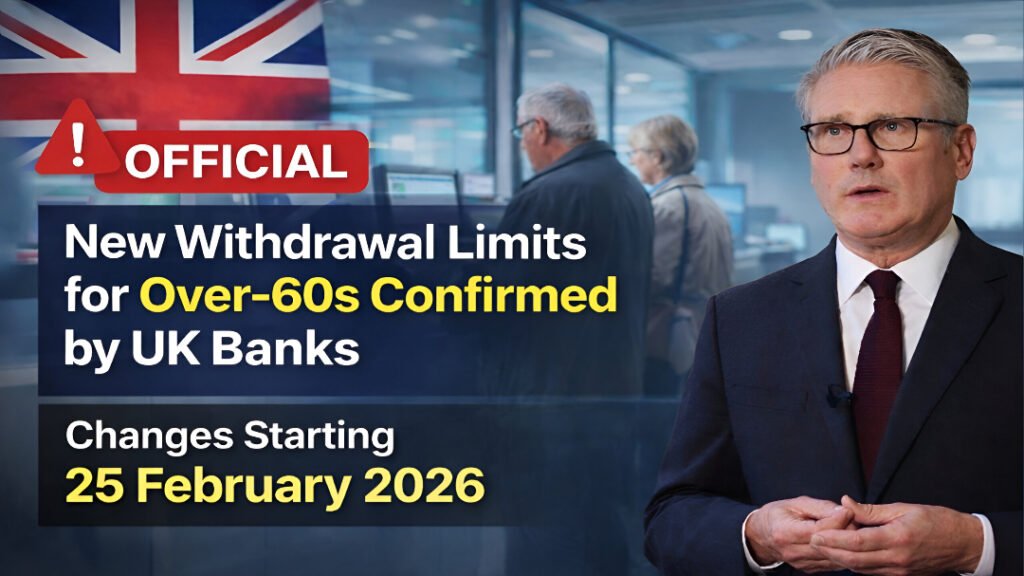
Hello Everyone, From 25 February 2026, several major UK banks are introducing revised daily cash withdrawal limits for customers aged over 60. The move has been officially confirmed following months of discussion around fraud prevention and safer banking practices. While the exact limits may vary between banks, the overall aim is to protect older customers from financial scams and large unexpected losses. These changes apply to both ATM withdrawals and certain in-branch cash transactions, depending on the account type and banking provider.
Why Banks Are Introducing New Limits
UK banks say the decision comes amid a steady rise in authorised push payment fraud and doorstep scams targeting pensioners. According to industry data shared by organisations such as UK Finance, older customers are increasingly being targeted by criminals posing as bank officials or family members. By adjusting withdrawal limits, banks hope to create an additional layer of protection. The policy is designed to slow down suspicious large withdrawals and give banks more time to intervene if something appears unusual or out of character.
Which Banks Are Involved
Several high street banks have confirmed updates to their withdrawal policies. These include:
- HSBC
- Barclays
- Lloyds Bank
- NatWest
Each bank may set slightly different daily limits based on account history and fraud risk assessments. Customers are being notified directly through letters, online banking messages, or mobile app alerts. If you bank with a smaller provider or building society, it’s advisable to check their official website for confirmation of any changes.
New Withdrawal Limits Explained
Although figures differ between providers, many banks are reducing standard daily ATM withdrawal limits for over-60s accounts. In some cases, customers who could previously withdraw up to £500 per day may see limits adjusted to around £250–£300 unless they request a temporary increase. In-branch withdrawals for larger amounts may require additional identity verification. Banks emphasise that these measures are not permanent restrictions but protective steps aimed at reducing fraud-related losses across the sector.
Who Will Be Affected
The new rules mainly apply to personal current accounts held by customers aged 60 and above. However, not every over-60 customer will automatically see the same limit. Banks will consider account behaviour, transaction history, and whether a customer has previously reported fraud attempts. Joint accounts where one account holder is under 60 may be treated differently. Business accounts and savings accounts are generally not included in this specific update unless otherwise stated by the provider.
What Customers Should Do
If you are over 60 and rely on regular cash withdrawals, it is important to review your bank’s official communication. Consider the following steps:
- Check your online banking or mobile app for updated daily limits
- Contact your branch if you expect to withdraw a larger sum after 25 February 2026
- Ask about temporary limit increases for one-off payments
- Ensure your contact details are up to date for fraud alerts
Taking these simple steps can prevent inconvenience and ensure smoother access to your money when needed.
Impact on Pensioners
Many pensioners across England, Scotland, Wales and Northern Ireland still prefer cash for everyday spending. For some, especially those who are less comfortable with digital banking, reduced limits may initially feel restrictive. However, banks insist that the aim is protection rather than control. Customers who regularly withdraw larger sums for legitimate reasons can still request adjustments. The changes are not intended to prevent access to funds but to introduce additional safeguards in a period of rising financial crime.
Fraud Protection Focus
Fraud prevention remains at the centre of this update. Criminals often pressure older individuals into withdrawing large amounts quickly. By lowering default limits, banks can flag unusual transactions and make contact before money leaves the account permanently. Financial watchdogs, including the Financial Conduct Authority, have repeatedly urged firms to strengthen protections for vulnerable customers. These new withdrawal policies align with that broader regulatory push towards safer banking environments across the UK.
Digital Banking Alternatives
Banks are encouraging customers to explore safer digital payment options where possible. Contactless card payments, direct debits, and bank transfers provide a traceable record and often come with stronger fraud reimbursement protections. For those unfamiliar with mobile banking apps, most high street banks now offer in-branch tutorials or telephone guidance. Family members can also help set up secure alerts that notify customers of large transactions. Learning these tools may reduce the need for frequent high-value cash withdrawals.
Temporary Increases and Exceptions
Customers who need to withdraw a larger amount for events such as home improvements, car purchases, or family occasions can usually request a temporary increase. This may require advance notice or identity checks at a branch. Some banks allow short-term limit adjustments through their secure mobile apps. It is important to plan ahead, especially around busy periods. Waiting until the last minute could lead to delays, particularly if additional fraud checks are triggered by unusual withdrawal activity.
Regional Consistency
The changes apply across the United Kingdom, including England, Scotland, Wales, and Northern Ireland. While the rules are broadly similar nationwide, some smaller regional banks or building societies may operate slightly different policies. Customers in rural areas where cash access points are limited should contact their bank early to avoid disruption. Community banking hubs are also being introduced in certain areas to maintain in-person services as traditional branches continue to close.
Public Reaction
Initial reactions among over-60 customers have been mixed. Some welcome the added protection, particularly those who have previously experienced scam attempts. Others are concerned about reduced financial independence. Consumer groups argue that communication will be key. Clear explanations and flexible options for temporary increases can ease frustration. Ultimately, banks face the challenge of balancing security with accessibility, ensuring older customers feel supported rather than restricted by the new withdrawal framework.
Looking Ahead
Financial experts suggest that this change could mark the beginning of wider personalised banking safeguards. As fraud tactics become more sophisticated, banks may increasingly tailor limits based on age, vulnerability indicators, and spending patterns. Customers should expect ongoing updates in the coming years as the industry adapts. Staying informed through official bank communications will remain essential, especially for those who prefer managing their money through traditional methods rather than fully digital channels.
Conclusion
The confirmed withdrawal limit changes starting 25 February 2026 represent a significant shift in how UK banks protect over-60 customers. While some may initially see this as restrictive, the broader aim is to reduce fraud and safeguard savings. By checking updated limits, planning ahead, and exploring secure payment alternatives, customers can adapt smoothly. Ultimately, the changes are about protecting financial wellbeing while maintaining fair access to personal funds across the UK banking system.
Disclaimer: This article is for general informational purposes only and does not constitute financial advice. Withdrawal limits and policies may vary between banks and individual accounts. Customers should consult their own bank or financial adviser for personalised guidance. Always rely on official communications for the most accurate and up-to-date information.