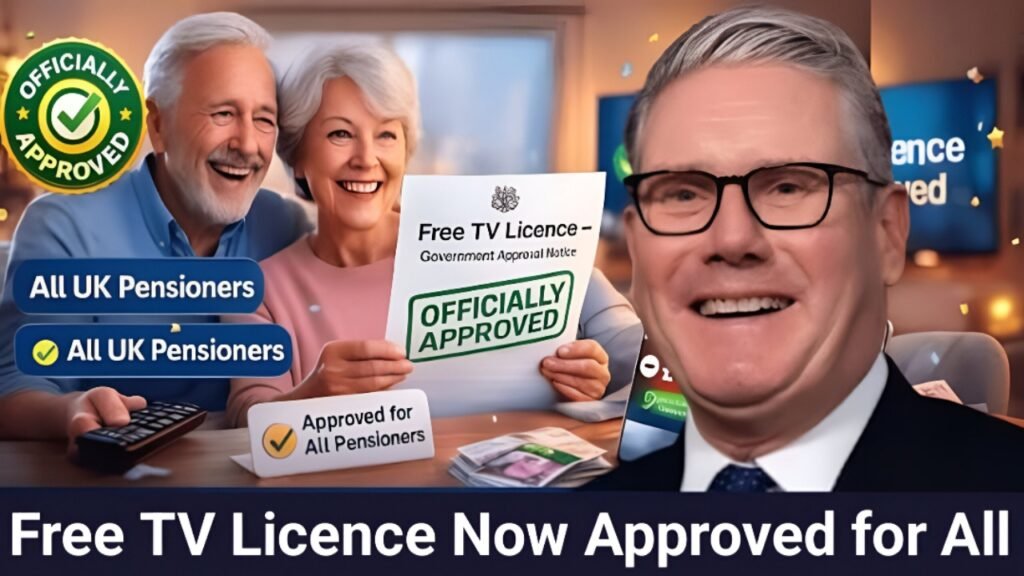
Hello Everyone, The UK Government has officially approved a major change that will impact millions of older residents across the country. Under the newly confirmed decision, all UK pensioners will now receive a free TV licence. This move has been welcomed by many households facing rising living costs. The announcement follows months of debate over support for older citizens who rely heavily on television for news, entertainment and connection to the wider world.
For years, the cost of a TV licence has been a concern for pensioners living on a fixed income. With energy bills, food prices and council tax continuing to rise, the removal of this annual fee brings noticeable financial relief. The government says the policy is designed to protect vulnerable households and ensure that older people are not excluded from access to public broadcasting.
Why the Government Took This Step
The decision was taken after growing pressure to review how older people are supported financially. Campaigners and pension groups argued that television remains an essential service for pensioners, particularly those living alone. Access to trusted news sources such as BBC is seen as vital, especially during national events and emergencies.
Ministers also acknowledged that many pensioners are not confident with digital platforms. While younger generations may stream content online, older residents often depend on traditional television services. By making TV licences free, the government aims to reduce isolation and ensure pensioners stay informed and entertained without additional financial strain.
Who Qualifies
According to the official guidance, all residents who have reached State Pension age will qualify for the free TV licence scheme. This means individuals currently receiving the State Pension or those eligible under existing retirement age rules will automatically benefit. The change applies across England, Scotland, Wales and Northern Ireland.
Eligibility is expected to be linked to State Pension status rather than household income. That means pensioners will not need to pass a means test to receive the benefit. However, households with multiple adults may still need to ensure the licence is registered correctly in the name of the qualifying pensioner.
What Pensioners Need to Do
Many pensioners are asking whether they need to apply or if the free licence will be issued automatically. The government has confirmed that current licence holders who meet the age criteria will receive direct communication about the next steps. In most cases, the transition is expected to be straightforward.
If you already pay by direct debit, payments should stop once eligibility is confirmed. Those nearing pension age may need to submit proof of age when their licence comes up for renewal. Official updates will be published on the government website and through trusted sources including GOV.UK.
Financial Impact
The standard TV licence fee currently stands at £169.50 per year for colour television. Removing this cost represents meaningful savings for pensioner households. Over five years, that adds up to more than £800 kept in retirees’ pockets.
- Annual saving of £169.50 per household
- Reduced pressure on fixed retirement income
- Extra funds available for heating, food or essentials
- Support aligned with wider cost-of-living measures
Economic analysts suggest the policy could also stimulate local spending, as pensioners redirect the savings into their communities.
Reaction Across the UK
The announcement has generated strong reactions from charities and advocacy groups. Organisations representing older citizens have praised the government for listening to concerns. Age UK described the decision as a “positive and practical step” in supporting retirees during challenging financial times.
At the same time, some critics have questioned how the policy will be funded in the long term. Public service broadcasting relies partly on licence fee income, and adjustments to funding arrangements may be required. The government has stated that sustainable financing plans are being reviewed to ensure no disruption to programming.
How This Affects the BBC
Because the TV licence funds the BBC, questions have been raised about potential budget gaps. Officials have indicated that discussions are ongoing to guarantee stable funding while honouring the commitment to pensioners.
- Government support may offset lost licence revenue
- Funding models could be modernised in future
- Core services and news programming are expected to continue
The broadcaster has reassured viewers that services will remain uninterrupted while details are finalised.
Wider Support for Pensioners
The free TV licence approval forms part of a broader package aimed at supporting older citizens. In recent years, pensioners have faced economic uncertainty, especially following inflation spikes and energy price increases. Measures such as the Winter Fuel Payment and Pension Credit remain available to eligible households.
By removing the TV licence cost, the government strengthens its message that pensioners should feel secure in retirement. Access to television not only provides entertainment but also plays a key role in mental wellbeing, particularly for those who live alone.
When the Change Takes Effect
The policy is set to come into force in the upcoming financial year. Official implementation dates will be confirmed through government announcements. Pensioners are advised not to cancel payments until they receive written confirmation of eligibility.
Those who believe they qualify but do not receive communication should contact the TV Licensing authority directly. Keeping personal details up to date will help ensure a smooth transition and prevent unnecessary charges.
What It Means for Families
For many families, the news brings peace of mind. Adult children often worry about older parents managing bills. Removing the TV licence fee eliminates one recurring payment and reduces administrative stress.
The decision may also encourage more pensioners to remain connected with current affairs, cultural programming and national events. Television continues to be a shared experience across generations, and maintaining access helps preserve that connection.
Conclusion
The government’s official approval of free TV licences for all UK pensioners marks a significant shift in support for older residents. By removing an annual financial burden, ministers aim to ease cost-of-living pressures and protect access to trusted broadcasting. While funding discussions continue, the policy is widely viewed as a welcome step towards greater security and dignity in retirement for millions across the UK.
Disclaimer: This article is for general informational purposes only. Details regarding eligibility, implementation dates and funding arrangements may change following official government updates. Readers should consult GOV.UK or contact TV Licensing directly for the most accurate and up-to-date information regarding free TV licence eligibility and related regulations in the United Kingdom.